Showing posts with label Personalities. Show all posts

Thursday, October 1, 2009

1)  BREAKING FIASCO:  Humane Society, ZooToo Brew
2)  COLUMBIA AND DARWIN:  Make nation's largest circulation magazine
3)  FALL BUSINESS FAVE:  Dawson Shoe Repair
4)  MORTGAGE AND HOUSING NEWS:  From Tom Stone
5)  ANNOUNCEMENTS:  Peaceworks, Eminent Domain, Habitat
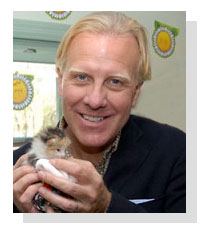

Thompson
BREAKING FIASCO:  Humane Society, ZooToo Brew

The Columbia Daily Tribune is reporting that ZooToo honcho Richard Thompson may be demanding the resignation of Central Missouri Humane Society director Patty Forister over allegations of impropriety.   ZooToo had problems earlier this year with an animal shelter-makeover winner in St. Louis that forced both sides to withdraw from the makeover competition.   

Read about it here:

Forister responded late this morning in a press release:

The Central Missouri Humane Society (CMHS) was saddened by the news that the Huhman and Burkes families have withdrawn support from the shelter they once rallied around.

"Working with Angie, Liz the girls to win the Zootoo.com Shelter Makeover contest has been a wonderful experience," said Patty Forister, CMHS Executive Director. "We are so grateful for the time they have devoted to the shelter and the animals will definitely see an improved quality of life thanks to them."

While specific complaints remain a bit unclear, CMHS submitted a completed application and all documentation by the required deadline as requested by Zootoo.com for review by contest representatives.

"CMHS has made some amazing accomplishments thanks to the community, Zootoo-ers, volunteers, staff, and board members," said Forister. "The organization has a bright future if we can all focus on the needs of the animals. They have to be our number one priority."


COLUMBIA AND DARWIN:  Make nation's largest circulation magazine
COLUMBIA, 9/29/09 (Beat Byte) --  With an astonishing 33 million readers as a Sunday insert in 470 national newspapers, Parade Magazine is widely considered America's -- if not the world's -- largest circulation publication.

And Columbia mayor/bicyclist Darwin Hindman made last Sunday's issue, as the subject of a feature story about "bike friendly cities." 

"For a bicyclist, Darwin Hindman is rather nattily attired, wearing a crisp tweed blazer and an orange silk tie as he pilots his ancient mountain bike through the center of Columbia, Missouri," writes Parade reporter Bill Donahue.  "Hindman, 76, is this Midwestern town's mayor and a survivor of both esophageal and prostate cancer. As he glides along, coattails flying, he is savoring the streets of Columbia, which he's transforming into one of the nation's premier cycling cities."

READ ALL ABOUT IT AT:


FALL BUSINESS FAVE:  Dawson Shoe Repair 

Ten years ago, I blew nearly $400.00 on a pair of black leather dress shoes from some fancy Italian designer.  I bought the shoes in Hollywood, Calif. at Beverly Hills prices, and for several years wore them with care.  But as they aged, I slowly relented, wearing them everywhere, in all weather, even in mud.

I bought some other dress shoes, only to discover I've never had a more comfortable pair than my $400.00 Hollywood loafers.  After listening to my lament, my wife pulled them out of the closet and took them downtown, to Dawson's Shoe Repair, a surprisingly bustling place filled with the rich smell of polished leather (if you've ever enjoyed the equally rich smell of aromatic pipe tobacco in a tobacco store, you know the feeling). 

My wife bragged on the nice man who runs the shop, Bob Wood, returning my shoes a week later looking brand new!  New soles, new polish, at extremely reasonable prices.   A way to save something, rather than just throw it away.  Sustainable footware. 

Getting ready for some out-of-town trips, I took the shoes back and met Bob myself.  My wife was right.  Not only is Mr. Wood nice, he may indeed be the nicest businessman I've met in Columbia, and I've met a lot of nice businesspeople.  Unfailingly pleasant and always smiling, Bob noticed a small scuff that had appeared on my shoe after he polished it.  Immediately, he took it back to his machine and polished it up once again.  The shoes looked brand new, all for only $5.00.

Check out Dawson Shoe Repair and meet Columbia's nicest businessman for yourself.  They're located at 212 South 8th Street, next to the Missouri Press Association building and kitty-corner from the Columbia Missourian.   You can also call 573-442-1014. 

MORTGAGE AND HOUSING NEWS:  From Tom Stone

Last week, the Fed met and stated they would not be buying more bonds.  This means that between now and the end of the first quarter of 2010, we should see a gradual rise in interest rates.  I predict by the end of that time frame, the 30 year rate will be in the neighborhood of 6% to 6.5%.  I would also expect some volatility during that time frame also. 

If you are a first-time buyer and qualify for the $8000 federal tax credit, NOW IS THE TIME.  The tax credit is set to expire on November 30, 2009.  October is almost here and with changes in FHA lending starting October 1, lenders may need more time to close. 

READ THIS WEEK'S NEWSLETTER HERE:

LOCAL ANNOUNCEMENTS

From Peaceworks

MAJOR PEACE RALLY:  Plan to come out on Sunday, October 11 for Eight is (More Than) Enough, the Columbia Peace Coalition's big fall event. Courthouse Sq., 1:30 p.m. Details TBA.

SUSTAINABLE LIVING FAIR:  Join us Saturday, Oct. 17 for our annual Sustainable Living Fair. This FREE event will run 10 a.m.-6 p.m., Columbia College Student Commons. Workshops, booths, displays, mini-solar tours, kids' activities, keynote and more. Details at www.slfcolumbia.org

PEACEWORKS' ANNUAL DINNER:  Don't miss this celebration of our community and the best potluck of the year. We'll gather on Saturday, Nov. 14, 6 p.m., at First Christian Church. Details TBA.

From The Show-Me Institute 

Presentation:  Eminent Domain and the Missouri Constitution
Speaker:  David Roland
When: Monday, October 5, 2009
Time:  Noon until 1:30
Where:   Room 208A, Reynolds Alumni Center, University of Missouri
Parking: Meters on the street, and in the Turner Parking Garage
Lunch:  Breast of Chicken Milano (or special diet choice)
Price: $20 for the general public, or $15 for Show-Me Institute members
For more information, or to reserve a seat if you do not register online, please contact Breck Frerking
at (573) 424-1713 or  Breck.Frerking@showmeinstitute.org.

From Habitat for Humanity

Ambassador Dinner and Fundraiser
7pm on Tuesday, October 20th
Peachtree Banquet Center. 
Music, dinner, program, bar and live auction.

RSVP by October 1st
email lunn777@hotmail.com or call 268-2405

Chris Lunn
President
Show-Me Central Habitat for Humanity
www.showmehabitat.net


Mike Martin
Blogitor in Chief
The Columbia Heart Beat

http://columbiaheartbeat.blogspot.com

Tuesday, September 29, 2009

Endorphins, beer, bay mist and fresh sunburn

1) SUNDAYS WITH ANDY: Endorphins, beer, bay mist and fresh sunburn
2) AT THE FOOD BANK: The right way to work with a board of directors

3) NOTED ACTIVIST CHALLENGES: Councilman on Humane Society

4) RESEARCH REVEALS: Who built Columbia's shotgun house

5) SEPTEMBER COMMENTARY: Germond, Rosman, Kennedy, Miller
6) READERS WRITE: A little hate mail

7) ANNOUNCEMENTS


Endorphins, beer, bay mist and fresh sunburn
from Reflections on a Lived-In Life by Amanda Clifton

I found myself on welfare at the age of 26 with a two-year-old and a GED. I wanted better for my son before he was old enough to remember, a quiet, pokey life like his father had growing up, going to the same school with the same bunch of kids in the same dinky, uneventful town.

I'd been told I should learn a trade, and while I think they meant hairdressing, I needed something that paid better and I wanted something that allowed for some alone time, some isolation, for when I felt cranky, sarcastic, or down. I thought of the lady welders who built the ships during WW2. I could do that. And as soon as Baby was old enough to say "Bye, Mom" I went to Laney College in Oakland to learn how.

I was surprised to discover that I was better at welding than most of the guys in my class. They were clumsy, slow to pick up the feel of the thing. I knit, crochet, do needlepoint, all that girly crap. I already had the fine muscle control of a good welder.

After I got certified, my teacher suggested I shop around for a union. The Shipfitters wanted too much money to sign up. The Millwrights couldn't put me to work right away. The Ironworkers laughed at me. Finally, I tried the Piledrivers, the guys who build bridges, docks, and foundations.

From the moment I walked into their union hall, I knew how it felt to be a varsity recruit. The Piledrivers signed me up and put me to work in three days.

My first job was on the Cypress Freeway replacement in Oakland. According to the California Department of Transportation (Caltrans), the Cypress Freeway was built in the 1950s to connect Alameda County to San Francisco and Oakland's industrial waterfront.

The freeway's path through West Oakland split the black community in half, uprooting 600 families and dozens of businesses. It cut off roughly four square miles from downtown and more affluent sections of West Oakland. In time, neighborhood businesses withered, and residents endured fumes and noise from thousands of cars overhead.

Millions of baseball fans were watching the third game of the World Series at Candlestick Park when history came calling and on October 17, 1989, the 7.1 Richter scale Loma Prieta earthquake struck.

Of all the scenes of destruction, the lasting image was the Cypress Freeway's collapse (right). Concrete pillars supporting the double-deck buckled. And forty-two people died, a terrible possibility we who live where the Earth shrugs have learned to accept and abide.

Rebuilding the freeway would change the local dialogue because this time, Caltrans would work with the people rather than through them. History would get better, and I would be a small part of it. Thinking about things this way helped keep me sane and get me through.

“You! Get in the hole!” That was my first foreman, a hulk from Idaho named Heber Floyd still fuming about being assigned a female apprentice. I don't think Idaho missed him.

It was mud season, and walking across the jobsite on my way to the hole (my first mistake), I got stuck in mud up to my knees and stepped out of both boots.

The hole was a footing, the foundation for a bridge support, 20 feet square and 20 feet deep, with five more holes in the bottom, 3 feet wide by 75 feet deep, laid out like spots on dice. I went down a sketchy, mud-encrusted wooden ladder with two guys and we steered and braced reinforcement cages lowered by crane into the smaller holes.

All day, I ran in mud steering and securing cages with large, panicky men screaming at me to keep my goddamn hands out of the way, stupid. By day's end, I was filthier than I 'd ever been, covered with mud dried black. That first night I was too tired to eat and too hungry not to. I lay in bed dozing and chewing, chewing and dozing, leftover Chinese food. The hardest thing I've ever had to do was get up the next day and go back.

It got better. I got faster and stronger and smarter. Eventually they put me on a different crew working 60 feet in the air on the roadbed itself, connecting the columns whose footings I'd braced. The work was just as hard, but different. I got a chance to look around.

I was surprised at how I felt, normal cynical me, awestruck by the tightly choreographed mayhem of freeway construction, the whole bizarre Stonehengeyness of what we were trying to accomplish, the backdrop of the San Francisco bay. I began to think of this as a bubble: This time, this place would only exist once; right now. I would make myself remember, from this point on, not just how everything looked, but how it all felt.

The wonder of hitting the debris layer from the 1906 earthquake on a foundation job in the Financial District, finding bits and shards of lives, a teacup handle, a picture frame, a broken toothbrush, an opium pipe.

The thrill and the fear of crowding with five men into the bed of a pickup, watching a tide of swine that could kill me if I fell sweep toward Pittburg's main drag after a livestock train derailed.

Bright sun and cold spray, boating atop 15-foot swells to the middle of the Richmond-San Rafael Bridge.

The desolation of the almond orchards in Linden with their giant squirrels and the lonesome desperation of San Quentin.

The unsettling quiet of 9/11/01 at the San Jose airport.

The feel of welding, of throwing lightning. Of driving 16-penny nails in two hits, of racing the other guys nailing up handrail, of beating them.

The wind on my skin, the smell of fresh plywood, the feel of muscles working, of bay mist on fresh sunburn in the evening, the smart of it cutting through endorphins and beer.

I wrote my son's name on the inside of the bridge with a big lumber crayon, before they covered it with roadbed. It was tradition, proof that you were there. Our Lascaux. I wrote that his mama loved him.

Maybe they'll find us, if the bridge falls down again.


Preparing Good Food with the Food Bank's Good Board
by Mike Martin for the Columbia Business Times

Earlier this year, University of Missouri marketing professor Joel Poor invited me to a board of directors meeting.

Poor, a board member, and I, his guest for the evening, stood across the table from one another. Commerce Bank president Teresa Maledy, another board member, stood next to me, and we never sat down.

On the agenda: frozen peas. And frozen beans. Huge boxes full, loaded into the boardroom by forklift and eagerly repacked into individual bags for future distribution.

Repacked by hand, that is. By the board. During the board meeting. And under the upbeat direction of a leader who many say is this community's most dynamic nonprofit executive, Peggy Kirkpatrick.

Welcome to the Central Missouri Food Bank, where team building, hands-on involvement and mutual respect define a board of directors that defies the rubber stamp stereotype of disengaged overseers who hear no evil, see no evil and speak no evil until evil comes pounding at the boardroom door.

The Good Board

After the inauspicious departure of Executive Director David White from the Missouri Theatre, I opined in these pages about a host of directorial dysfunctions that have cost many agencies in Columbia and Boone County dearly in the past: Superintendents and school boards erupting in embarrassment; the city manager and city council going their separate ways; secrecy, dissension and the strange politics of board dynamics squatting like dead weight on organizations and their missions.

Then I saw Kirkpatrick and the Food Bank board, packing food and talking; packing food and planning; packing food and laughing and doing something most boards never get accomplished in a single meeting: actually getting something done, something tangible, real and worthwhile.

"Projects like this build a sense of team among the board members," Maledy told me. "It is a great way to get to know the other board members on a more personal level. It also gives the board a close-up and practical look at what is involved with getting the food out to our customers."

In other words, a practical look at the heart of the mission in a way that "connects us personally and perhaps emotionally to those in need," Poor said.

Team-building exercises are also about fostering trust and respect, he explained, the twin glues of healthy board interaction. "When one of us disagrees or some of us dissent, that's fine. We don't turn away; we don't turn a cold shoulder if someone doesn't go along. We respect each other, and we know that if someone takes issue with something, it's important that we listen and learn."

Plugging in

Recruiting board members who have a "clear vision of what your organization is trying to accomplish" is the most important part of building a good board, Kirkpatrick told me. As with most nonprofit groups, the food bank seeks "representation from various segments of society" and a wide geographical distribution "since we serve 32 counties."

But board members aren't demographics, an insight Kirkpatrick emphasizes with an uncommon mantra: "We try to help each board member plug in to the mission in a way with which they are most comfortable." Plugging in by packing food "was actually the board's idea," Kirkpatrick said. "They wanted to know firsthand how the volunteer process worked, the challenges we have with bulk product, and they wanted to expose their friends to the food bank in a fun way."

Encouraging engagement

For board members like Poor and Maledy, service to a most worthy cause — feeding the hungry — keeps them interested, excited and coming back for more.

As a bank president, Maledy, a longtime member of the food bank board, is in demand and has to be choosy about where she spends her limited time. "I need to believe in the organization," she said. "I want to contribute ideas and support based on my experience and skills. I also believe in lifelong learning."

But Poor reminds us that not every organization, or its executive director, encourages the level of engagement and learning that Kirkpatrick does. "Our board members know she really appreciates each of us," Poor said. "And how important is that? A director who actually wants you there."

Kirkpatrick sees board service as a two-way street down which her organization gets tangible assistance while giving something far less tangible but just as meaningful in return. "My hope is that each board member will become aware of the faces of hunger," Kirkpatrick said. "And by their involvement, become the faces of hope."


NOTED ACTIVIST CHALLENGES: Councilman on Humane Society

A couple of weeks ago, 4th ward councilman and mayoral candidate Jerry Wade criticized my position on funding the Central Missouri Humane Society. When I suggested that humane society supporters campaign and vote against any politicians who refuse to support them, Wade said, "The tactic you suggest they pursue is one of innuendo and threats of reprisal if funding requests are not met. That is not an appropriate, necessary, nor likely successful, approach." He also criticized my journalistic integrity.

Columbia Citizens listserv founder Traci Wilson-Kleekamp, who also co-founded TARRIF (http://www.tarrif.org), a group that successfully opposed a number of developer-friendly tax increases, responded.

Dear Councilman Wade:

Over the past year, I have heard a number of news reports about Humane Shelters across the country getting hard hit with a surge in animals. With the tremendous loss of jobs and homes, many people have abandoned, given up and/or have been unable to afford care for their animals. Humane societies across the country have increased fees and cobbled together creative partnerships to meet increased demand.

I am sure the local economic climate has presented fiscal challenges for the Central Missouri Humane Society (CMHS) as a not-for-profit organization. I am also aware of the City's reported budgetary challenges.

That said, is there a plan or is it possible for the City to help CMHS find financing sources (grants, etc.) in the event that they are unable to secure adequate dollars in these extraordinarily difficult economic times? What alternate plans are in place or being discussed to aid in the protection and care of unwanted or abandoned animals? What will happen if CMHS is unable to secure additional financing?

While you may disagree with Mr. Martin, in my personal opinion to challenge his professionalism because he questioned [5th ward councilwoman] Laura Nauser; challenged the City's spending priorities; and encouraged citizens to "get political" to advocate for change is unfortunate.

It bothers me when elected officials accuse community members and the press of being irresponsible and uncivil, when they aggressively challenge a situation. You seemed to intimate that Mr. Martin is also remiss by NOT celebrating enough of the positive things in our community.

I think it is both inappropriate and unprofessional to make a public issue so personal. Via The Columbia Heartbeat, Mr. Martin frequently does what I consider to be very good work with his reporting, not only in his investigative efforts, but in shining a bright light on many positive aspects of the community. Mr. Martin is quite frankly so effective that he challenges our local media to work a bit harder.

Like Mr. Martin, I feel that citizens should become political -- expecting, demanding and advocating for policies they feel adequately address their priorities.

These concerns aside, I appreciate that you answered Mr. Martin in a point by point fashion, explaining the facts as you see them. I do think it is appropriate to give the public an informed understanding of the City's contracts, budgets, challenges and capabilities. I also think it is wise to deal with the public's expectations, especially when you feel they may far exceed the City's financial capacity. People want the City to spend our tax dollars wisely and hold contracting agencies accountable.

Seems to me the big positive here is that we already have much common ground. Many people in the Columbia community care deeply about animals and the viability of CMHS.

Best regards, Traci Wilson-Kleekamp


RESEARCH REVEALS: Who built Columbia's shotgun house
by the Boone County Historical Society

Research on the shotgun house -- recently moved to the Boone Junction Historic Village from the corner of Garth and Worley Streets -- has revealed that the first owner and probable builder was Luther McQuitty. McQuitty was born about 1871, probably near the old Boone county community of Everett of at least one parent who was a former slave. One of his parents or grandparents was also white.

City Directories, census enumerations, and deed records first document the shotgun house at the northeast corner of Garth and Worley in 1911. Mr. McQuitty owned the lot and his family lived there for about ten years.

He married Ella Davenport in 1892 and they had three children. About 1911, Luther and his third wife, Lottie Wright, moved into their new home, a 16'x34', three-room house at what was then 423 N. Garth, on the northeast corner of Garth and Worley.

Pushing aside obstacles in post-Civil War Boone county, McQuitty went from being a laborer to a plasterer to an owner of a dozen properties in the general vicinity of Garth and Worley in Columbia, making him one of Columbia's largest landlords.

One of McQuitty's descendants sent a photograph of Luther McQuitty which will be displayed inside the house when it opens to the public at the Boone Junction Historic Village south of town. If you'd like to volunteer time to work on the house, work sessions are held each Thursday from 8 am to 1 pm.


SEPTEMBER COMMENTARY: Germond, Rosman, Kennedy, Miller

George Kennedy on Columbia activist Paul Albert
We old-timers remember, with varying degrees of delight and revulsion, Paul Albert. For the benefit of any newcomers in the audience, I’ll just say that Mr. Albert was our pre-eminent gadfly of city government. His harangues, directed mainly at Ray Beck and the City Council Ray dominated during his years as city manager, were notorious for their length and their vitriol.

J Karl Miller on downtown cameras
I am also in Mayor Hindman's corner for installing mobile surveillance cameras in downtown Columbia....Where public safety is concerned, the city must err on the side of individual protection and crime deterrence whenever possible.

David Rosman on a new mayor
There are problems and directions that the next winner of the coveted “Councilman at Large” seat cannot avoid. The new mayor will be able to see Columbia and Boone County not only through the next decade, but for the 2020s and beyond.


Al Germond on the history of David Lile's Quickie Quiz
It began with a call from David Lile, host of the Morning Show on News Talk 1400. A listener wanted to know when KFRU’s daily “Quickie Quiz” feature first aired, and Lile asked me if I could come up with the date. The answer came after rolling through microfilm copies of both Columbia daily newspapers in the superb newspaper library at the State Historical Society of Missouri in Columbia. The mission was successful, but it also sprung a trap.


READERS WRITE: Collected hate mail, unedited

I'M SICK AND TIERD OF GETTING THIS BULLSHIT AND IF IT DOESNT STIP I WILL REPORT YOU AND YOUR PROPAGANDA TO THE ATT. GENERALS OFFICE!!!!!!!!!!!!!!!!
-- Greg Smith, Columbia
Mike Martin the Blowhard. He is nothing but a hack with a blog and a small column in a local business rag [the Columbia Business Times]. Not a real reporter, and totally biased in his reports. I'm tired of seeing his spam all over the place--you can't hit a locally based group site without his weekly beg being posted to visit his site--like any of us care....
-- Marla D. H., aka Insanidea, Columbia

First allow me a comment on Blogs in general and yours in particular. There are no rules and no accountability when it comes to publishing a Blog. You and your fellow bloggers can say anything without suffering any consequences when what you publish is false. Sadly many people believe what you say, especially when you knowingly write what you think they want to believe. I think this is called pandering. Shame on you! -- Bob Pugh, Columbia

ANNOUNCEMENTS

Sixth Ward Councilwoman Barbara Hoppe will host a meeting on safety issues at the Unitarian Universalist Church, 2615 Shepard Boulevard, on Tuesday, September 29, 2009 starting at 6:30 p.m. Representatives of the Columbia Police and Health departments and from the Neighborhood Response Team will be available to listen to residents, address any concerns they may have and answer questions.


Mike Martin
Blogitor in Chief

The Columbia Heart Beat

Saturday, May 16, 2009

The Columbia Heart Beat

Local Opinion and Commentary

1) Maestro Kirk Trevor's Gentle Panache
2) Landlord Nuisance Laws "Ineffective, Meaningless" Councilman Says
3) Roper, "Other" lead Hindman, Wade in Mayor's Race Poll
4) Councilman Wade Speaks out on Mediacom Mess
5) HEAR YE! HEAR YE! Local Announcements


1) Maestro Kirk Trevor's Gentle Panache


It's not every day that school age musicians get the chance to study with a real maestro -- a professional conductor that is, who leads orchestras around the world.

That's why my wife and I jumped at the chance to enroll our daughter -- a 6th grade cellist -- in the Missouri Symphony Conservatory's Junior Strings program, directed -- and conducted -- by Kirk Trevor, who has commanded some 40 professional orchestras in 12 countries, from Bern, Switzerland to Indianapolis, Indiana.

The Conservatory's 2009 Spring Concert -- held at the Missouri Theatre April 27 -- featured a quartet of youthful orchestrations: Maestro Trevor leading both the Missouri Symphony's Youth Orchestra and Junior Strings, playing Handel, Dvorak, and Brahms; and Smithton middle school music teacher Melissa Straw conducting the Treblemakers and the Children's Chorus, singing Vivaldi, Handel, and Robert Louis Stevenson.

A frequent guest instructor at Northwestern University who annually gives master conducting classes at the Zurich and Basel Conservatories in Switzerland, Trevor is what our daughter aspires to be -- a classically trained cellist, who graduated from London's Guildhall School of Music.

With those credentials, I might have been concerned that my child was in for too much imperiousness, too great a dose of high-handedness from a demanding prima donna at far too tender an age.

But Trevor has impressed me for years with his leadership of the Missouri Symphony Orchestra, especially during the Missouri Theatre's family-friendly Hot Summer Nights concert series, an inexpensive, musical confection that this summer features Peter the Wolf, Tubby the Tuba, and master jugglers The Gizmo Guys.

"Where in the World of Music is Carmen Sandiego?" a symphonic, edu-taining take on the popular, globe-trotting mystery maven, introduced me to Trevor, who not only commanded the symphony with a steady hand, but also took command -- with a gentle hand -- of an audience filled with children, many of whom had never seen an orchestra before.

Carefully explaining each instrument, and the music it made, Trevor charmed both children and parents, even inviting a couple of young guest conductors (my then 8-year old daughter was one of them) to take a turn with his musical wand.

Columbia is blessed with music educators who specialize in grade school children, retired CPS teacher Ed Hanson chief among them. But Kirk Trevor stands out because he's not a full-time teacher, but rather a full-time practitioner. He came to the U.S. on a Fulbright grant, won the Leonard Bernstein Conducting Competition, and went on to lead the Dallas Symphony Orchestra.

A master teacher for the American Symphony Orchestra League and the Conductor's Guild, Trevor also co-founded and has been Artistic Director of the world's largest conducting school -- the International Workshop for Conductors, held in the Czech Republic for a month every summer.

And every year he brings to Columbia a gentle panache: a unique patience in a world of precision, practice, and intense dedication. Our children are lucky to have such a kind introduction to such a powerful art.

RELATED:
http://www.motheatre.org/about_mtca/groups.asp?group_ID=52
http://www.motheatre.org/about_mtca/groups.asp?group_ID=1


2) Landlord Nuisance Laws "Ineffective, Meaningless" Councilman Says

As what he called an "exercise in self reflection for good governance," third ward Columbia city councilman Karl Skala answered parts of our One-Size-Fits-All Candidate Survey this past election cycle. But since he isn't running for re-election until next year, we decided to hold his answers until after the election.

Here are Skala's answers to questions about criminals, landlords, and judges:

Q: What role do you think our courts should play in our struggle with crime? What role do you think local landlords should play in our struggle with crime? How can police be expected to cope if courts and landlords -- if the entire community for that matter -- doesn't also partake in the process?

SKALA: The issue of adding judges and landlords to the criminal justice equation should not be a question of whether but rather should be a question of how. The complete answer to the question involves several actors, i.e., judges, landlords, police and repeat offenders. The role that they each play as a function of their co-dependent relationships not only defines the terms of the equation but also maintains its proper balance.

There is the obvious relationship between repeat offenders and the judges who seem to perpetuate or at least provide ample opportunities for increased recidivism. A potential solution could include e-bracelets and/or house arrest rules with severe, dependable and exception-less sanctions for non-compliance for all repeat offenders. This solution would also positively influence the relationship between the police and those with whom they regularly interact.

There is also the powerful “green” (as in the color of dollars) relationship between landlords and repeat offenders. Even though the City’s nuisance ordinance carries the potential for property forfeiture, this provision has never been enforced, not even once; so much for ineffective disincentives. Perhaps strict landlord licensing would provide an effective and sufficient disincentive.


Q: What can you, as a school board member or city council person, do to encourage our judges, prosecutors, and landlords to reduce crime and keep violent offenders off the street?

SKALA: There is an essential relationship between local elected officials and their constituents that can significantly affect the criminal justice equation solution, especially when considering the apparent disconnect between the city’s recent legal advice regarding nuisance crime and effective law enforcement. If this advice cannot be translated into effective action, perhaps we need to get another legal opinion.

Regardless of the relationship(s) we focus on, we simply must put an end to this “revolving door of meaningless sanctions” and deliver a primary responsibility of local governance, i.e., public safety.


3) Roper, "Other" lead Hindman, Wade in Mayor's Race Poll


Take heart, all ye potential 2010 mayoral wannabes.

Our Columbia Heart Beat online poll has an undefined candidate, aka "Other," leading incumbent Mayor Darwin Hindman 50% to 13% should Hindman run again. "Who Should Run for Columbia Mayor in 2010?" our poll asks, and you've answered with retired banker and Columbia Tribune columnist Bob Roper (22%) leading both Hindman and 4th ward councilman Jerry Wade (13%).

But so far, "Other" is firmly in the lead.

In related polling news, Mayor Hindman enjoys a comparatively dismal 35% job approval rating that puts him in George Bush territory: http://www.pollingreport.com/BushJob.htm

City Manager Bill Watkins isn't far behind, at 31%.


4) Councilman Wade Speaks out on Mediacom Mess

I have been contacted by a number of people upset about the decision by MediaCom to drop KETC (the public TV station from St. Louis) from its offerings.

People need to understand that the City of Columbia has no authority to do anything about Mediacom’s channel selections. This loss of local control is important.

Some of you may remember back in the 1960’s when the telephone company was General telephone and the service had declined and was pretty awful. The franchise renewal was coming up for renewal. A public movement started with the intent of denying a franchise to General Telephone. Public hearings allowed many citizens to present documentation of extremely poor service. General Telephone responded with major commitments to upgrade the service, which they in fact did. That is why Columbia has had pretty decent line telephone service since.

Over the last several legislative sessions, new laws were passed by the Missouri legislature and signed by the governor denying cities from having any say about the communication companies that provide services to a community. It is one expression of the political agenda of the last several sessions to move local control to corporate headquarters so the corporations do not have to deal with individual communities. Another example of the same political agenda is that it is now illegal for a city to offer cable service as a public utility.

People upset about the impending loss of KETC should complain to Mediacom. However, that is not your only recourse. The control is now with the State of Missouri Public Service Commission and the Federal Communications Commission. Letters expressing your concerns should go to them. You may also want to contact the Governor and your state and federal legislators and request returning appropriate local control to communities, where it should be.

Jerry Wade
Columbia City Council
Fourth Ward


5) HEAR YE! HEAR YE! Local Announcements

The Columbia/Boone County Board of Health is collecting public comment regarding future animal control ordinances that will address the overpopulation of unwanted pets. The deadline for comments is today, May 14, 2009. Their blog is: www.boonecountypublichealth.blogspot.com.

Columbia Business Times Entrepreneurial Excellence Week (May 18-20) features a series of free educational opportunities for anyone interested in improving how they do business (marketing, leadership, finances). Register at www.ColumbiaBizAwards.com or contact Sean Spence seanspence@earthlink.net.

This Saturday, May. 16, 4th Ward Councilman Jerry Wade will be at the Rendezvous Coffeehouse from 1:00p to 2:30p to talk to anyone who would like to visit. PLEASE NOTE THE TIME CHANGE. The Rendezvous Coffeehouse is at 3304 Broadway Business Park Ct., which is on the south side of West Broadway west of HyVee. Wade is also available to speak with any Neighborhood Association or any other group on the City Budget. It can be a 20 minute presentation or a 2 hour workshop. If interested, please contact Jerry at ward4@gocolumbiamo.com

Also announced by Councilman Wade:

The public is invited to a groundbreaking ceremony for the expansion of Scott Boulevard. The ceremony will be held at 8:30 a.m. Friday, May 22, at the Daniel Boone Little League Field on Scott Boulevard, near Chapel Hill Road. The ceremony kicks off the beginning of street improvements to Scott Boulevard.

The GetAbout Columbia Providence/Stadium and Stadium/Forum intersection projects will be completed May 19, 2009.

Monday, June 8, Special Council meeting – Civilian Review Board report, along with a draft ordinance. The Council vote on the ordinance could be at the June 15th Council meeting or held for a later meeting if Council decides to discuss the issue at a work session.

West Broadway Community Advisory Committee meeting scheduled for 4:30 – 6:00p, Wednesday, May 13 has been rescheduled for 4:30 – 6:00p, Tuesday, June 9 at the ARC, 1701 W. Ash. This is the last meeting of the Committee.

Two Scott Blvd/I-70 Interchange meetings: Stakeholder’s Meeting: Staff/Council/Commission on Tuesday, June 16, 5:30 p.m. to 7:30 p.m. Daniel-Boone Building, fourth floor conference room. Public open house, ARC, Monday, June 22, 4:00 p.m. to 8:00 p.m.

-- Mike Martin for the Columbia Heart Beat

Thursday, December 11, 2008

FRED PARRY: On Getting the Boot

COLUMBIA, 12/11/08 (Beat Byte) -- In a rare moment of public self-reflection that shatters some stereotypes about Fred Parry's outsized personality, the former KFRU talk show host writes that "Getting Fired Ain't So Bad" in this month's edition of his magazine, Inside Columbia.

"I'd liken the experience to having the opportunity to attend your own funeral. People in hushed tones offered their expressions of sympathy and regret. When I told them 'I'm okay...It's all good,' they'd wink at me and tell me it's normal to be in denial."

Among former listeners who've signed a petition at http://www.bringbackfredparry.com/, the sentiment runs like this: "It will never be the same without Fred." Signed, Leslie Bowman.

Parry says he misses those listeners, but has moved on to "new opportunities."

"There was an impressive cast of characters that woke up every morning with KFRU. Those tales from menopausal nuns, curmudgeons, rednecks, and the second oldest living person in Boone County made the mornings fly by," Parry writes. "While I'll miss my listeners and the opportunity to roll in the mud with Simon Rose, it's abundantly clear to me that new opportunities are on the horizon....When one door closes, another one truly opens."

READ ALL ABOUT IT:

http://www.bluetoad.com/publication/?i=8636
(PAGE 226, second to last page)

Tuesday, November 25, 2008

SAYING GOODBYE: To Bernie Martin, Columbia's Beloved Postman


There are those who will tell you that Barbara G. Bishop got the most votes of any challenger during the 2008 August Democratic primaries not because of her fiery platform for the office of Boone County Assessor nor because of her solid credentials, ready smile, energetic style, or natural ease around We the People.

No, there are those who will tell you that Mrs. Bishop, a virtual unknown running against a mightily-funded 20-year incumbent, pulled nearly 6,000 of 14,000 votes cast on that muggy late summer's day for one reason: the man by her side, Bernard "Bernie" Martin, otherwise known around Columbia and Boone County as a widely-loved, decades-long member of the US Postal Service, Columbia Mall branch since 1997.

Bernie Martin died suddenly of an apparent heart attack last week. He had just returned from a hunting trip, "doing what he loved," Barb said. "He bagged a 10-point buck and couldn't have been happier."

A 36-year Postal Service veteran, Martin was also a Vietnam veteran awarded a Bronze Star for valor. At his funeral in Pilot Grove last Saturday, where a standing-room-only crowd of some 200 friends and family said goodbye, faded photographs of Bernie and his in-country squadron lay on tables of memories that captured his life.

Bernie Martin looked like Ernest Hemingway, and loved hunting, fishing, and what Hemingway called "the graceful, macho arts." Martin had a graceful touch too, which helps explain all the photos of children on that table of memories, playing and smiling around this macho, gentle man.

I saw Bernie's graceful touch after a campaign parade through downtown Columbia. We had walked back to our cars, parked on quiet side streets in the fading afternoon heat. I was putting my son in his car seat and I looked through the rear view mirror.

Bernie and Barb had stopped at the driver's side door of their Jeep, all sparkling and parade patriotic.

He was kissing her delicately, with her chin at the tips of his fingers. I showed my son. "They're smooching," he said.

Bernie had thrown himself with such gusto into his wife's campaign -- marching alongside her in every parade; knocking on every door in small towns like Centralia and Hallsville in the exhausting, oppressive heat; believing in her and in the fundamental American freedom that campaigns represent -- the freedom to choose leaders he had defended so many years before.

It was a nice respite, that kiss. A nice pause on the trail of the free.

I turned ever so quickly to buckle my son and though I didn't hear anything -- no starting car nor anyone driving away -- when I looked back in the rear view mirror, Barbara and Bernie were gone.

"Think about it," was Bernie's signature expression, and think about it I have.

What a perfect image for a goodbye, where the last thing my son and I saw that day was a gentle expression of love and belief.

RELATED and photo credits:
http://columbiatribune.com/2008/jun/20080629feat003.asp

Wednesday, October 15, 2008

SAYING GOODBYE TO: The Artist Don Choate

Don Choate, whose easy grace and gentle wisdom helped inspire and shepherd the ongoing renaissance of North Central Columbia's artistic Village neighborhood, has died. He was 88.

Choate's life as an artist, activist, father, and friend took him from delivering ice in his Michigan hometown to studying art in New York City and practicing his craft in Santa Fe. He designed psychedelic light shows for rock bands and furniture with an organic touch. As a graphic artist, he illustrated greeting cards with a keen eye for minute detail.

Turning to portraits later in life, Don's paintings had "depth and an expressive quality that gave a feeling for the place or the person," much like a photograph, Boone County Historical Society Museum director Deborah Slade Thompson told the Columbia Daily Tribune for a 2003 retrospective on Choate's life and work. Working from his home/studio on the corner of Fairview and Coats in the Village, Choate produced artwork that he exhibited locally dozens of times.

Four decades ago, nearing fifty, Choate embarked on a cross-country journey of rediscovery. Opening his home to the counter-culture revolution of the sixties, he camped with nomadic hippies on his New Jersey property; picked apples in Oregon with migrant farm workers; and at age 61, spent a few days in jail after protesting the Callaway nuclear power plant.

A longtime social justice advocate, Choate spent 16 years working at the Central Missouri Food Bank, creating its original logo and finally retiring at 83.

"Wonderfully caring and gentle," Choate created portraits that "captured the personality," food bank director Peggy Kirkpatrick told the Tribune. "Not just a good likeness of a person, but he seemed to capture something of their spirit."

Frequently turning his pen to the Tribune's editorial page, Choate urged the community to support a local ballet at the Columbia Performing Arts Centre. "I couldn't believe the dancers I was viewing were high school students!" he exclaimed.

In another editorial letter, he scolded Governor Matt Blunt for "reducing the Medicaid benefits of tens of thousands of Missouri's vulnerable residents -- the poor, seniors and the disabled as well as tens of thousands of children. I am outraged!"

And fourteen years ago, at a youthful 74, Choate penned a prescient letter supporting then-county commission candidate Jeff Barrow, who ran on the Green Party ticket against current southern district commissioner Karen Miller and who now presides over the city's planning and zoning commission.

"Green areas must be maintained to preserve the charm of Columbia," Don wrote. "If there is no overall plan, taxpayers are going to have to pay for extended water and utility lines, as well as urban sprawl."

This writer will remember Don Choate for always being there -- at every major neighborhood meeting and every discussion of the things that mattered to his neighbors -- from the Village Arts Team to Neighborhood Crime Watch to the restoration of the Heibel-March Store. He was the softspoken and well-considered voice who helped move dissent to resolution and paralysis to action. "Well, I say we just send that letter" or "let's just call the city," he would say. "It shouldn't be that hard to just get it done."

"He was so many wonderful things, but most of all, he was non-judgmental," Choate's daughter Lenore Danziger told me. "You don't realize it, but that's such a rare kind of spirit."

Don Choate is survived by Lenore and her husband, the photographer Avery Danziger; son, David; daughter, Rebecca and her husband, Pedro; grandchildren: Jason, Sofia, Atlante and Alban; and great grandchildren, Carey and Andrew.
The family invites friends to celebrate Don's life with a retrospective showing of his artwork on Sunday, November 2 from 2 PM to 5 PM at the Alleyway Arts studio on Broadway Alley, parallel to Walnut and Broadway between 10th and Short Streets, behind K-Lani Hair Salon.

"I’ve lived a good life," Choate told Tribune reporter Liz Heitzman. "I can’t complain."
-- Mike Martin for the Columbia Heart Beat

RELATED:

Portrait of a man
Artist Don Choate enters a new phrase of his expressive life.
http://columbiatribune.com/2003/oct/20031026ovat055.asp

Photos from Jenna Isaacson at the Columbia Daily Tribune

Wednesday, September 10, 2008

THE EXTRAORDINARY FAMILY OF EDWARD RICHARDSON

By Mike Martin for the Columbia Business Times


“Happy families,” Leo Tolstoy famously said, “are all alike.”

Though he never explained exactly what he meant, the Great Russian author’s words have a truthful ring. Try to tell the Cosbys from the Bradys. It’s not easy.

It wasn’t easy for me to tell one happy family from another until I got to know Ed Richardson.

Artist’s Life

Every afternoon for nearly fourteen years, Ed comfortably inhabited the third period of his life as an artist. On returning to Columbia after a long and successful career as a Hollywood set designer and artistic director, he became a loose nucleus for a family of friends who typically gathered in the late afternoon on the right hand side of the long, sleek, stone bar at Flat Branch Pub and Brewing.

With the waning sun peaking through the windows, Mike Bowling, a math professor from Stephens College, would join Ed in reading the New York Times and the Columbia Daily Tribune.
Karl Kruse and Jake Halliday would file in. Mike Dunn would quietly appear. On Fridays, Paul Cary, a toxicologist from MU, and his good friend Mary Condy would fill a big glass on the bar with a bag of peanut M&M’s.

From family members Jarret Crader or Rob Stine or Mike and Kathy Weston, Ed ordered the same draft—the IPA or India Pale Ale that now bears his name. He worked on small projects. He did the crossword puzzles. He spoke about politics and society with the tolerant wisdom of a man who had traveled and lived.

As a voting member of an elite fraternity called the Academy of Motion Picture Arts and Sciences, Ed shared his passion with friends, lending films on DVD—both well known and art-house—that arrived every year courting his vote for the Oscars.

“Ed was the closest thing many of us will ever get to fame and celebrity,” Cary told the crowd that gathered this past March at Flat Branch to celebrate Richardson’s life and his January passing. “He brought a small part of a big world here to Columbia.”

Hollywood Who’s Who

Richardson’s film bio reads like a Who’s Who of Hollywood collaborations: Michelle Pfeiffer; Oliver Stone; Orson Welles; Joan Crawford; Paul Newman; Katharine Hepburn; Al Pacino and Warren Beatty. About directors Francis Ford Coppola and George Lucas, with whom he designed the Michael Jackson-inspired Captain Eo ride at Disneyland, Ed told me, “George was impossible— disorganized, demanding, disgruntled. But Francis was wonderful. He had marvelous a way with all those big egos.”

Ed started his career with Sissy Spacek and Martin Sheen just as they were starting theirs: on the set of a murder-and-mayhem classic called Badlands. Moving from crime to comedy, Richardson became Mel Brooks’ assistant art director on the film High Anxiety, graduating to full art director on Scarface, American Gigolo, Cat People, and toward the end of his 25 year career, the film for which he received an Academy Award nomination, Robin Williams’ comedy Toys.

”It was a great life,” Ed told me. He was a man of few words.

The Hotel Piedmont

Paul Cary saw Ed’s life in artistic stages: the Hollywood years; the Columbia years; and the earlier, Piedmont period. Nestled near the Missouri Bootheel, Piedmont was to Ed Richardson what Hannibal was to Mark Twain: an inspirational hometown ultimately left behind.

The middle child of five, Richardson grew up in his parents’ hotel. By nine, he was filling it with artwork. On leaving home, he studied at the University of Missouri, and New York’s famous Pratt Institute. He joined the Army, and then went to Los Angeles to follow what his brother Rayman called his “true passion.”

“There were several films, I’m sure, during production where he’d go 24 hours without any sleep,” Rayman told the Tribune for a
retrospective on Ed’s life.

Ed came to Columbia in 1994 to be nearer his aging parents.

That Evening Sun

There was something ominous in Ed’s voice when he began complaining about the bitter cold of the winter of 2006. He was getting short of breath climbing stairs. At the time, he was drawing a book cover for me, as he had for William Least-Heat Moon’s River Horse. For Least-Heat Moon, another member of Ed’s extended Columbia family, he painted a
solitary boat on a lonely journey across a wide and meandering river.

For my book, Ed captured the decimation of Poland during the Second World War in a fire and charcoal abstraction of broken lines and burning embers.

Ed seemed to be getting worse and finally saw a doctor. His diagnosis came to me as a whisper. “Where’s Ed?” I had asked. “I haven’t seen him for a while.”

Lung cancer. Chemotherapy. Exhausted. His family was crushed by the news.

Paul, Mary and Karl took food to Ed’s apartment that he barely touched. They begged him to eat. They begged him to stop smoking. And when he’d hit the hard stuff at home, they begged him to stop that, too.

At times, I heard despair and even hurt. To his family, Ed was abetting a terrible enemy.

On picking up my book’s cover art from his apartment one afternoon, Ed left me a note that I still have, written in a shaky hand, all CAPS. After I read it, I understood. It was like Hemingway, at the end of his life.

MICHAEL, THIS IS ALL MY SKETCHES. I’M SURE YOU’LL KNOW THE COLOR THAT YOU RESPOND TO. SORRY I’VE DRIED UP, BUT I HAVE SO LITTLE ENERGY. ED

What, pray tell, does the artist have when the wellspring finally runs dry?

In time, Ed’s already slight frame grew gaunt and emaciated. Still, when he was feeling well enough, he rarely missed a day with family. When I didn’t see him at Flat Branch, I always asked how he was. “He’s been feeling good,” or “We’ve been pretty worried,” or “He just got back from the hospital,” family members Maurice Manring and Michelle McFadden would explain, walking their dogs by my house.

When I last saw Ed, he was feeling better. He had gained a little weight. It was late Fall, a time of the Missouri year that he longed for during his Hollywood period.

As Fall chilled into winter, I wondered how Ed would fare. I got my answer from Lance Wood, who manages Flat Branch. Lance told me Ed had died.

He was in the hospital, Lance said. But he was cheerful and talkative, and that felt good. I’m guessing that, while reflecting on his life, Ed realized the same thing his family helped teach me: Happy families are all alike, in one important way. They share love.

The artist, it seems, was right once again.